
Textbook-Grounded AI for Teachers That Stays Inside the Syllabus
Why classroom AI should stay inside the syllabus, and how textbook-grounded AI for teachers shows its sources, refuses to guess and works in Tamil and English.
 Aasiri Team · 6 min read
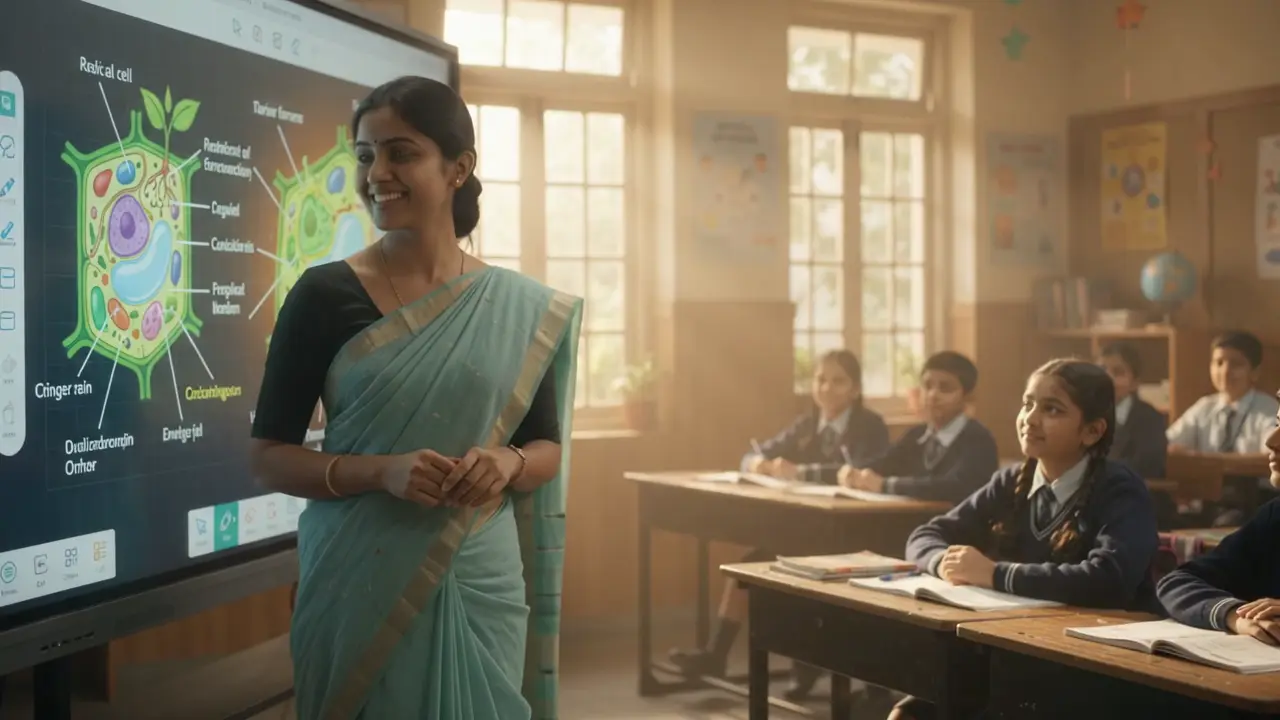
Every teacher has met the student who arrives with an answer "from the internet" that does not quite match the textbook. Now that AI chatbots sit on every phone, that student has plenty of company, and sometimes it is a colleague preparing tomorrow's lesson late at night. These tools are impressive, but a general chatbot does not know which board your school follows, which textbook your students carry, or how an answer should be written in the exam. For a classroom, the more useful kind of AI is a narrower one: an assistant that stays inside the syllabus.
Why a general chatbot is the wrong fit for the classroom
General-purpose AI tools are built to sound helpful on any topic. That is exactly what makes them risky in school. Without a fixed source, they can:
- give a definition that suits a college student but is far above a Class 7 child
- use a method, layout or term your textbook does not use, which confuses students at exam time
- mix up facts, dates or steps while sounding completely confident
- offer no way to check where the answer came from
A teacher can usually catch these slips. A student revising alone the night before a unit test usually cannot. And when a parent asks why their child wrote something that is "not in the book", it is the school that has to explain.
The answer is not to ban AI. It is to choose AI that behaves like a careful teacher: it answers from the prescribed book, shows the passage it is relying on, and admits when the book does not cover the question.
What "textbook-grounded" really means
Whether you run a State Board, Matriculation or CBSE school, the principle is the same: an AI tool for your classrooms should answer from the books your students actually study. In practice, that comes down to three behaviours.
Answers come from the prescribed books
A grounded assistant first looks up the textbooks your students use and builds its answer from the passages it finds, rather than from whatever it absorbed from the open web. For a Tamil Nadu State Board school, that means the State Board books on the students' desks. The answer stays at the depth and in the vocabulary of the syllabus, which is what students are marked against.
It shows its sources
Every answer should come with the textbook passages behind it. This matters more than it sounds. A teacher can glance at the source and decide in seconds whether the answer suits her class. Students learn to go back to the book instead of treating the AI as the final word. And during doubt-clearing, the whole class can look at the same passage together.
It refuses to guess
The most valuable behaviour is one you hope not to see often. When the textbook passages do not cover a question, a well-built assistant says so plainly instead of producing something that merely sounds right. That tells the teacher the question is either outside the syllabus or needs her own explanation, and both are worth knowing.
A simple test for any classroom AI: ask it something clearly outside the syllabus. If it answers confidently anyway, think twice before putting it in front of students.
Tamil medium and English medium, both first-class
Many schools in Tamil Nadu run English medium and Tamil medium sections side by side, and teachers often move between them in the same day. An AI tool that works well only in English quietly leaves half the school out. Translation is not a fix either: a Tamil medium student needs the terms printed in their own textbook, not a word-for-word rendering of an English answer.
When the assistant answers from the Tamil medium book for Tamil medium students and the English medium book for English medium students, both groups get explanations that match what they read in class and write in exams. For a teacher who handles both sections, it also saves the mental effort of switching terminology every period.
Using it for lesson prep and doubt-clearing
A textbook-grounded assistant does not replace teaching. It is a quick, dependable reference that keeps you inside the syllabus while you do the teaching. Here is a simple routine that fits a normal school week:
- Before the lesson, check the core idea. Ask what the textbook says about the topic and read the passages returned, so your explanation uses the book's own language.
- List the likely doubts. Try the questions students usually ask on that topic. Where the assistant says the book does not cover something, mark it. That is where you will need your own example or activity.
- Keep a short video ready. If a topic video is linked, queue it on the smart screen for students who need to see an idea, not just hear it.
- Clear doubts live, with the source on screen. When a student asks something mid-period, look up the answer together and show the passage. Students see you going back to the book.
- Turn it into practice. After the lesson, set a short quiz on the same topic. With Aasiri's online quizzes and assignments, teachers can generate a quiz draft with AI and edit and approve it before publishing.
- Keep the final say. Read each answer before you rely on it. The sources are there precisely so that you can judge.
For principals, the bigger benefit is consistency. When every teacher in a department prepares from the same textbook-grounded reference, students in different sections hear the same definitions and methods. There is more on how this fits into a teacher's day on our page for teachers.
Three questions to ask any AI vendor
Before rolling out an AI tool to your staff, ask: Which books does it answer from? Does it show its sources for every answer? What does it do when the book has no answer? If the replies are vague, the tool is not ready for your classrooms.
How Aasiri helps
TeachPilot is Aasiri's AI assistant for curriculum questions. It answers from the Tamil Nadu State Board textbooks, in both English medium and Tamil medium. It shows the textbook passages it used, links short topic videos, and when the passages don't cover a question it says so instead of guessing. Aasiri's video library adds short lessons organised by class, subject, unit and topic, in English or Tamil medium, and teachers can generate quiz drafts with AI, then edit and approve them before publishing.
If your school follows the Tamil Nadu State Board, book a demo and see TeachPilot answer from the textbooks your students already use.

We build Aasiri, the school operating system for Indian schools. More about us →